





| Place of Origin: | China |
|---|---|
| Brand Name: | BAXIT |
| Certification: | CE |
| Model Number: | BXT-N9-D |
| Minimum Order Quantity: | 1 set |
| Price: | US $35463 / Unit |
| Packaging Details: | export wooden box |
| Delivery Time: | 5-8 work days |
| Payment Terms: | L/C,D/A,D/P,T/T,Western Union, |
| Supply Ability: | 500 set/sets per month |
| Test Range: | 0.5nm-10,000nm | Temperature Control Range: | 5 ℃ -90 ℃ |
|---|---|---|---|
| Test Sample Power P: | AC100V-240V DC12V/10A | Environmental Requirements: | 5-45℃, 10% - 85% Relative Humidity (no Condensation) |
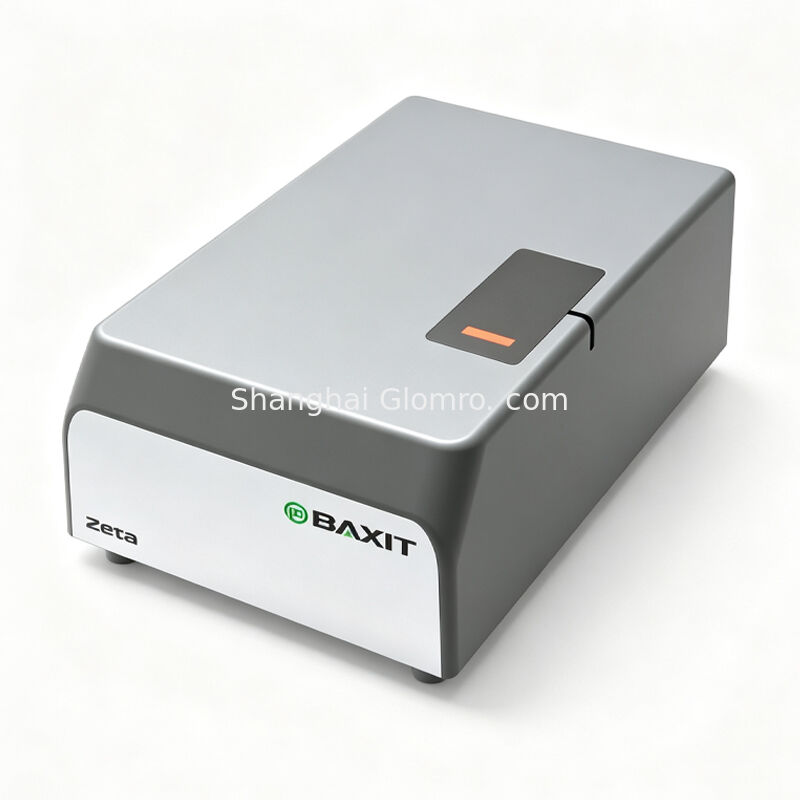
| Appearance Dimensions: | 650mm×410mm×200mm | Weight: | 20Kg |
| Highlight: | Zeta potential analyzer nano particle,Particle test machine custom configuration,Laboratory testing equipment with warranty |
||
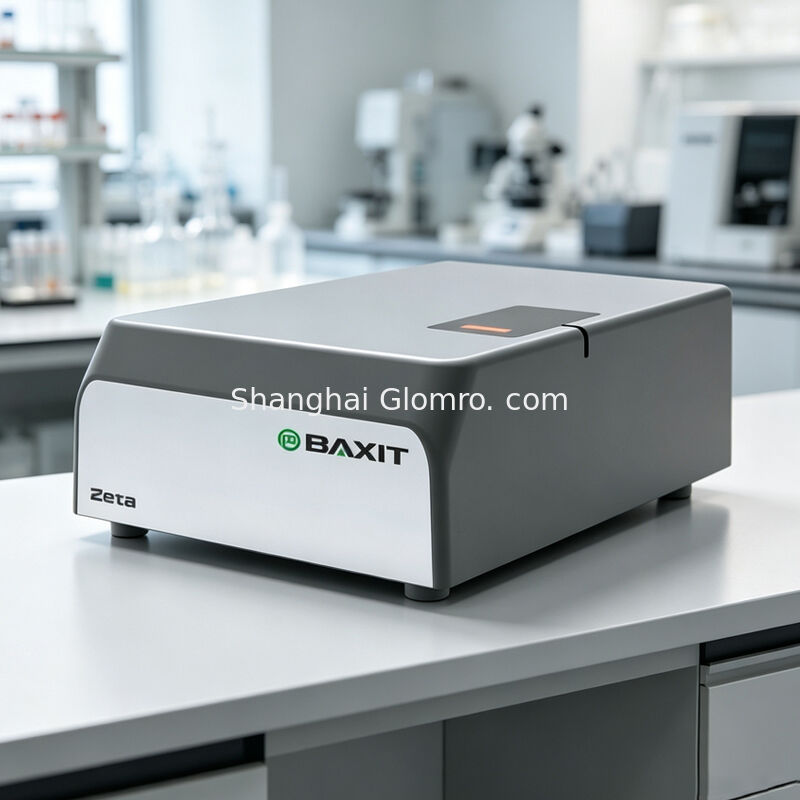
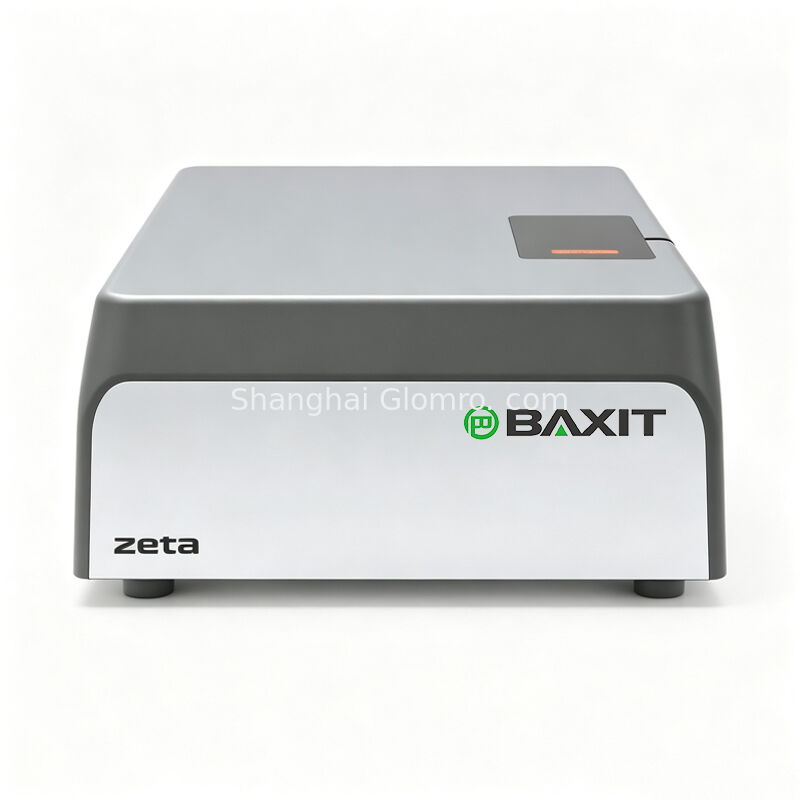
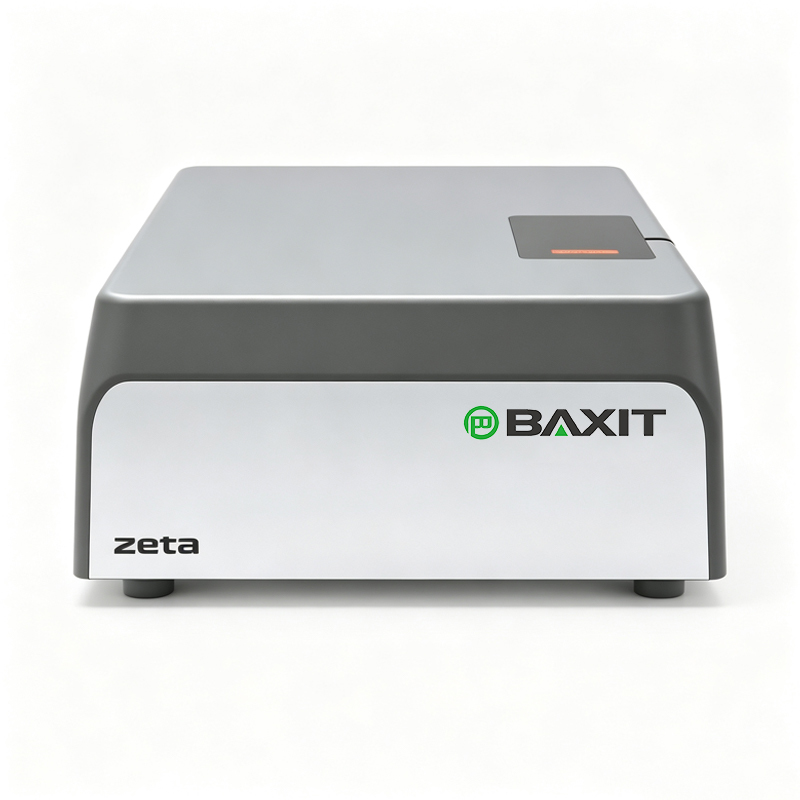
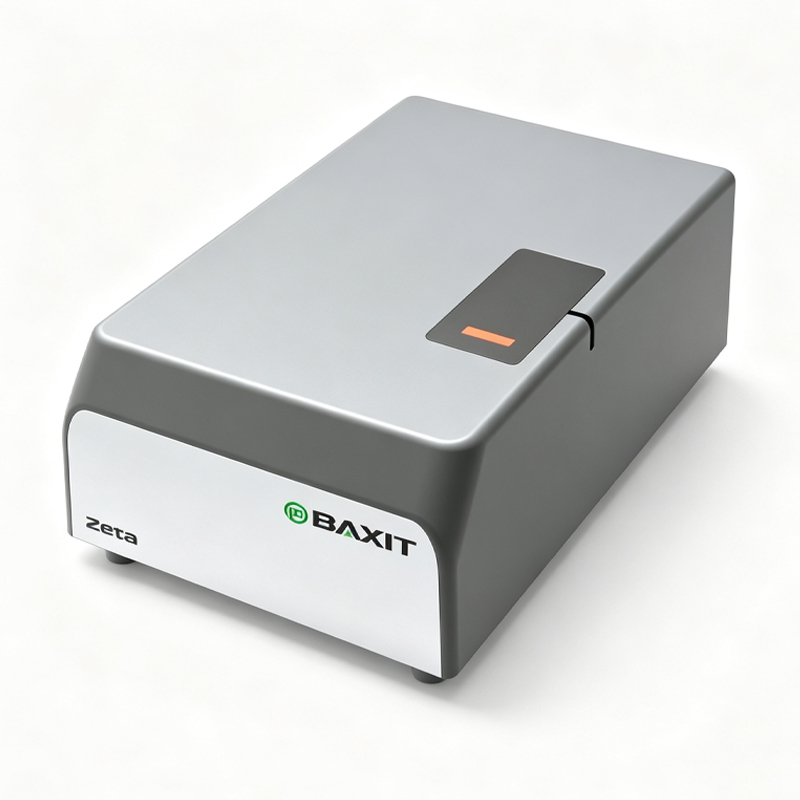
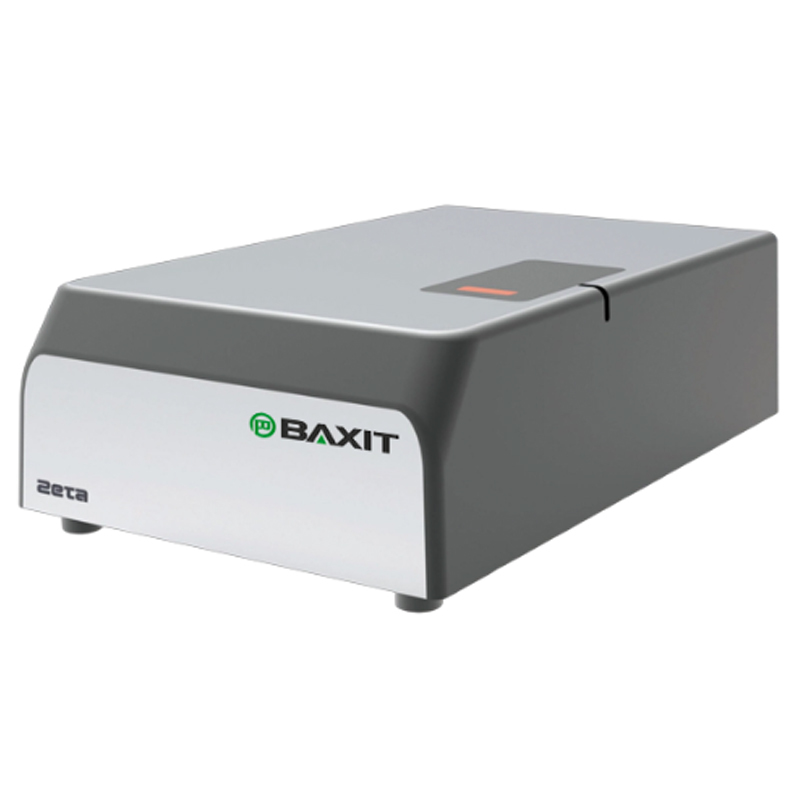
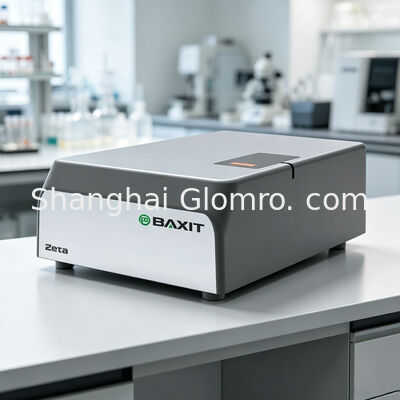
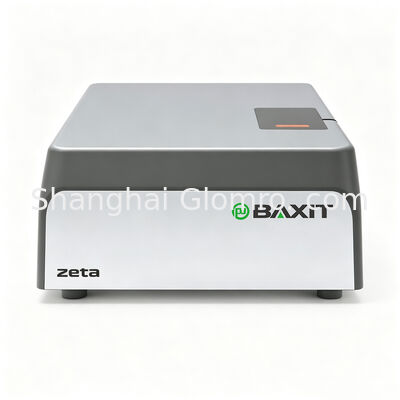
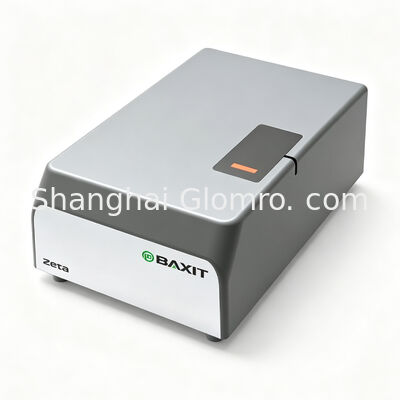
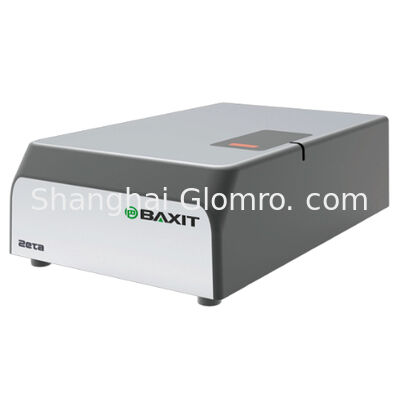
Nano Size and Zeta Potential Analyzer
Instrument Introduction
The nanoparticle size and Zeta potential analyzer is our latest integrated analysis instrument that combines nanoparticle size testing and Zeta potential testing. It uses the dynamic light scattering (DLS) principle by measuring the fluctuation signal of scattered light intensity generated by Brownian motion of particles in the sample and obtaining the autocorrelation function through the digital correlator to analyze the diffusion coefficient of particles. The particle size and distribution are calculated based on the Stokes-Einstein equation; The electrophoretic mobility of the particles was determined by testing the frequency shift of the light scattered by the particles under an applied electric field using the electrophoretic light scattering (ELS) technique, and the Zeta potential and distribution of the particles were calculated according to the Henry equation; The static light scattering (SLS) technique was used to measure the average intensity of scattered light at different concentrations of the standard substance and the sample, calculate the Rayleigh ratio at each concentration and plot the Debye curve to obtain the molecular weight and second Vili coefficient of proteins and polymers.
Schematic diagram of nanoparticle size and potential testing
Main Features
1. All-fiber test optical path for high sensitivity
The test optical path built with a high-performance low-noise fiber-coupled semiconductor laser and an all-fiber dynamic scattering light receiving system, using low dark count, high-sensitivity HAMAMASTU photomultiplier tube (PMT) as the photodetector, gives the entire test system extremely high sensitivity and signal-to-noise ratio, laying the foundation for test accuracy and high resolution
2,Full-range calibration verification ensures test accuracy
Calibration verification is carried out over the full range using multiple national particle size reference materials, with test accuracy errors all less than 1% (higher than the requirements of the national standard GB/T29022-2021/ISO22412:2017).
3 High-precision constant-temperature control ensures test stability
The semiconductor laser with automatic constant temperature technology ensures stable and reliable laser output. The high-precision constant temperature control system keeps the sample being tested in the sample cell at a constant temperature throughout the test process, avoiding test deviations caused by changes in medium viscosity and particle Brownian motion speed due to temperature variations, thus ensuring the reliability and stability of the test results.
|
Number of tests |
Average particle size test value |
|
No.1 |
15.89 nm |
|
No.2 |
16.08 nm |
|
No.3 |
16.01 nm |
|
No.4 |
16.14 nm |
|
No.5 |
16.19 nm |
|
No.6 |
16.11 nm |
|
Average |
16.07 nm |
|
Standard deviation |
0.11 nm |
|
Repeatability error |
0.66% |
4 High-speed digital correlator for high resolution
The self-developed high-speed digital correlator, as the core component for signal processing, collects dynamic scattered light intensity at high speed in real time and performs autocorrelation operations. It has the ability to identify 6ns signal resolution, 100-megabit data processing speed and a linear dynamic range above 1011, ensuring the integrity of the autocorrelation curve of particles of different sizes over the full range.
5. The cosine fitting analysis method enables rapid testing
The motion of the particles, driven by an applied electric field, includes directional electrophoretic motion and irregular Brownian motion. Therefore, the autocorrelation function obtained by detecting the scattered light intensity is the superposition of the signals of the particle diffusion and electrophoretic motion. The cosine fitting analysis method can effectively obtain the Doppler frequency shift signal caused by the electrophoretic motion in the autocorrelation function in a short time, eliminating the influence of Brownian motion. To achieve rapid Zeta potential testing while alleviating electrode polarization and increasing the service life of the Zeta potential sample cell.
Scope of application:
It is widely used for testing the particle size, Zeta potential and molecular weight of samples such as organic or inorganic nanoemulsions, powders, polymers, micelles, viral antibodies, etc. in various fields including new materials, fine chemicals, bioengineering, paints and coatings, food and medicine, aerospace, defense science and technology, etc. It provides a data base for studying and improving material performance, controlling production costs, and judging the stability of dispersion systems and the tendency of particle agglomeration.
Product advantage
² High rate, high sensitivity correlator
² Hamamatsu High Sensitivity photomultiplier tube from Japan
² Double air flow circulation structure
² Full DC power supply
² Japanese Opnex constant temperature and power laser
Technical parameters and detailed configuration of BXT-N9-D Photocorrelated Nanoparticle size analyzer
| Model | BXT-N9-D |
|
| Test Principles | Dynamic light Scattering (DLS), electrophoretic light scattering (ELS), static light scattering (SLS), Photon correlation spectroscopy (PCS) |
|
| Enforce standards |
GB/T 29022-2021/ISO 22412:2017 GB/T 19627-2005/ISO 13320:1996 GB/T 32671.2-2019/ISO 13309-2:2012 |
|
| Test Parameters | Particle size, Zeta potential, molecular weight, second Vili coefficient |
|
| Particle size | Scattering Angle | 90° |
| Test range | 0.5nm-10,000nm | |
| Accuracy error | ±1% (NIS traceable reference material) | |
| Repeatability error | ±1% (NIS traceable reference material) | |
| Concentration range | 0.1mg/ml-40%w/v* | |
| Trend test | Temperature trends, time trends | |
| Sample cell (optional) | 4ml polystyrene cuvettes, 4ml quartz glass cuvettes, 40μl microcuvettes | |
| Zeta potential | Scattering Angle | 12° |
| Zeta potential range | No actual limits | |
| Electrophoretic mobility range | >+20μm·cm/V·s / <-20μm·cm/V·s | |
| Conductivity range | 0-270 mS/cm* | |
| A range of particle sizes suitable for testing | 1nm - 120μm * | |
| Electrode | U-shaped capillary electrode | |
| Molecular weight | Measurement range | 340 Da - 2×10⁷ Da * |
| System Parameters |
Light source | High-performance solid-state laser, λ = 532nm, P = 30mW |
| Light emphasizes the range of nodes | 0-100% auto-adjust | |
| Detector | Photomultiplier tube (PMT) | |
| Correlator | 512 physical channels, sampling time 0.1us - 1ms dynamically adjustable | |
| Temperature control range | 5℃ to 90℃ | |
| Temperature control accuracy | Plus or minus 0.1℃ | |
| Working power supply | AC 100V-240V @ 50Hz-60Hz, DC 12V/10A | |
| Environmental requirements | 5-45℃, 10% - 85% relative humidity (no condensation) | |
| Appearance dimensions | 650mm×410mm×200mm | |
| Overall weight | 20Kg | |
| Note: * Related to sample and option | ||